Prostatitis is at the top of the list of the most common men's diseases.It occurs as a result of inflammation of the soft tissue of the prostate.The disease affects a man's well-being and the quality of his intimate life.There are many traditional ways to treat the disease.But experts continue to discover new things in the treatment of prostatitis.Modern techniques enable the problem to be dealt with quickly and in a way that protects your health.An integrated approach is considered a prerequisite for successful treatment.
Modern methods of treating prostatitis
In most cases, prostatitis is only diagnosed in the later stages when it becomes chronic.The basis of treatment is the use of antibacterial agents and non-steroidal drugs with analgesic effects.In complicated cases, men are prescribed alpha blockers.
To ensure the most effective treatment possible, other methods of influencing the prostate are also used.In recent years, many new things have appeared in the treatment of prostatitis.
Physiotherapeutic procedures are particularly in demand:
- radiofrequency therapy;
- electrical stimulation;
- balloon urethral dilation;
- EHF therapy;
- laser treatment;
- Ozone therapy.
Modern methods of treating prostatitis focus on improving blood circulation in the genital area.This eliminates stagnant processes that contribute to the inflammatory process in the prostate.
The procedures can be carried out both in hospital and on an outpatient basis.Treatment of chronic prostatitis is carried out taking into account accompanying pathologies and individual characteristics of the body.
Laser therapy
Laser therapy is a procedure that uses a strong beam of light to heat an area of the skin's surface.This improves metabolic processes in the cells of the prostate and accelerates the regeneration process of the affected areas.
The procedure is carried out not only to treat prostatitis, but also for preventive purposes.
Contraindications to the procedure include:
- acute form of the disease;
- oncological formations;
- Hemophilia;
- acute pathologies of the respiratory tract.
The procedure for restoring prostate function using laser exposure has both negative and positive aspects.The disadvantages include a high risk of burns and disruption of testosterone production.
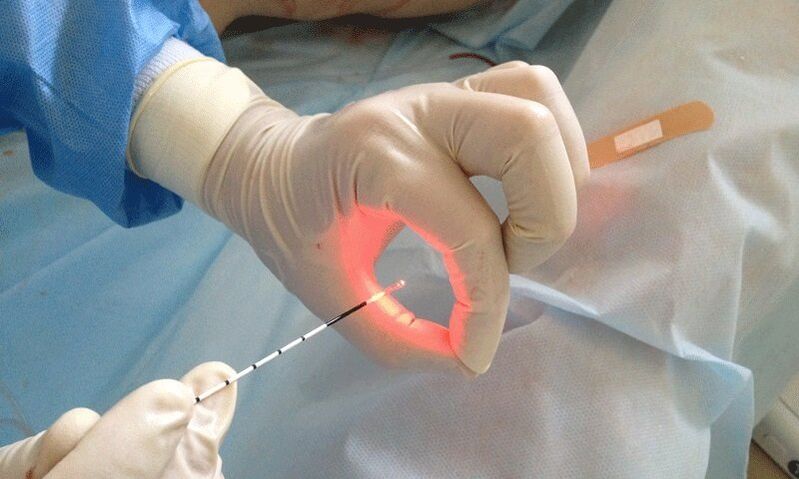
The advantages of the method include:
- short recovery period;
- low likelihood of complications;
- relapse prevention;
- Strengthening the blood vessels in the pelvic area.
Laser therapy for prostatitis is not performed over the age of 65.
Radiofrequency therapy
Radiofrequency heat therapy is often used in the treatment of various diseases.In medicine it has a second name – thermotherapy.Radiofrequency energy generates heat in the deep layers of the skin.
This allows you to achieve the following effect:
- elimination of painful sensations;
- removal of swelling;
- dilation of blood vessels;
- Oxygen supply to the tissue.
When treating the prostate gland, therapy with radiofrequency radiation is used to limit the destruction of organ tissue.It allows you to relieve the urethra from the pressure of the swollen prostate.
This normalizes the man's urinary function.In 75% of cases, improvement in well-being is observed within 3-4 weeks after treatment.
The procedure is carried out on an outpatient basis under the supervision of medical staff.The general course of treatment includes 3-10 visits to the physical therapy office.The duration of the procedure is 20 minutes.After the procedure, the patient is under medical supervision for at least one hour.The doctor selects the treatment regimen individually.
Electrical stimulation
Electrical stimulation causes muscle contraction, clearing the prostate tissue of toxins and stagnant fluid.The purpose of the procedure is to reduce the volume of the prostate through the influence of low-frequency electric current.
During the treatment session, a catheter equipped with electrodes is inserted into the urethral area.At this moment the patient lies on his back with his legs bent.The doctor controls the current manually, focusing on the man's well-being.
If the procedure is carried out endorectally, the rectum is first cleaned.Treatment is not carried out for malignant formations, abscesses and acute forms of the disease.
The result of electrical stimulation is as follows:
- elimination of painful sensations;
- normalization of blood circulation;
- increased erection;
- Restoration of urinary function.
Ozone therapy
One of the newest methods of treating prostatitis is ozone therapy.This is a process in which an ozonated isotonic sodium chloride solution is introduced into the rectal opening.The optimal ozone concentration is 2.0 µg/ml.The course of treatment includes 12 to 15 procedures.
Ozone therapy is combined with antibiotics and prostate massage.When using this treatment method, 93% of patients noticed a significant improvement in their well-being.The procedure is used not only as an adjunct to primary drug therapy, but also as an independent treatment.
Balloon urethral dilation
Modern treatment of prostatitis using balloon urethral dilatation helps to eliminate the symptoms of the pathological process.The main advantage of the procedure is the lack of pain.In some cases, an ultrasound scan is performed during this procedure.
An endoscopic tube is inserted into the urethra with an inflatable balloon at the end.With its help, the lumen of the urethra expands.
In complicated cases, this treatment method is combined with stent implantation.A special cylinder is placed in the urethra area, which prevents the reverse narrowing process.
What is vacuum therapy?
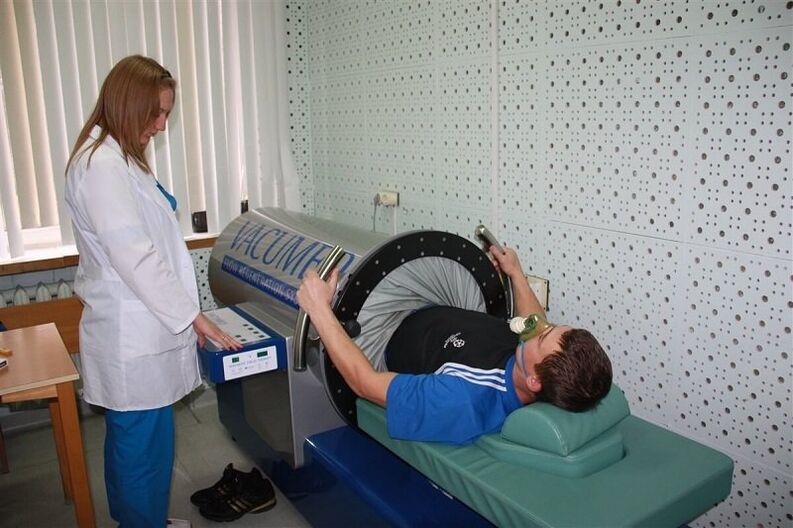
A special device is used for vacuum sanitation of the prostate.The disadvantages of vacuum therapy include the lack of effect on the cause of the problem.The device only eliminates the symptoms of the disease.Therefore, its use is recommended in conjunction with drug treatment or surgical methods.
Contraindications to the procedure include:
- diabetes mellitus;
- diseases of the circulatory system;
- psychological problems;
- acute form of the disease.
The aim of vacuum therapy is to bring the penis into an erect state.The device used during the procedure ensures blood circulation in the pelvis, which normalizes the functioning of the prostate.
The principle of action of vacuum therapy on the male body is as follows:
- The penis is inserted into the cylinder of the pump and then all the air is pumped out.
- The blood flows into the pelvis, causing the penis to become erect.
- The compression ring is transferred to the base of the genital organ.
- Air is introduced into the pump and then removed from it.
How does thermotherapy affect the treatment of prostatitis?
Heat therapy is considered a gentle way to influence the prostate.Compared to drug treatment, it is more effective, but does not lead to the same complications as surgery.Laser, microwave or radio frequency energy is used to generate and maintain a specific temperature.
The procedure allows you to quickly and easily destroy pathological prostate cells.
Heating of the prostate tissue can be superficial or deep.With its help, the organs of the genitourinary system are disinfected and the conditions for drug therapy are improved.
The result of the treatment is as follows:
- optimization of local metabolism;
- increasing local immunity;
- increased arterial and capillary blood flow;
- Increasing the permeability of cell membranes.
Thermotherapy belongs to the group of minimally invasive procedures with high effectiveness.It is not used as a primary treatment.Most often, thermotherapy enhances the effect of drug therapy.
The principle of influence depends on the temperature regime during treatment:
- At temperatures around 45°C, diseased cells are destroyed, but healthy cells are not affected.
- In the range of 45°C to 70°C necrotic changes occur in the tissue of the prostate.
- When the temperature reaches 100°C, the volume of the inflamed organ decreases.
Despite the high effectiveness of the procedure, it is not carried out in all cases.This is due to the high probability of complications.
These include hematuria, bladder spasms, dysuria, and urethral pain.The procedure is prohibited for people with blood diseases, mental disorders or those who wear pacemakers or joint prostheses.
New drugs for prostatitis
The pharmaceutical market tends to be constantly updated.In recent years, many drugs have appeared to treat prostatitis.The drugs are characterized by rapid penetration into the prostate tissue and a cumulative effect.
Treating prostatitis in men requires a lot of strength and patience.Treating an illness is much more difficult than taking timely preventive measures.There are drugs that normalize the functioning of the prostate, thereby preventing the development of the inflammatory process.
It is strictly forbidden to take medications for prostatitis without a doctor's prescription.
Current news about new paths
As a result of recent research by American scientists, it has been shown that cancer cells are able to adapt to the conditions that arise in the body during drug treatment.Therefore, it is very important to use new methods to combat the disease.
Prostate cancer is most often treated with a special medication.Despite its effectiveness, it causes minimal damage to the healthy cells of the male reproductive system.
Additionally, hormonal drugs are used:
- Antiandrogenic agents are used for androgen blockade in combination with pituitary hormones.
- Gonadotropins are necessary to reduce testosterone concentrations.
- Pituitary-like drugs block the production of sex hormones.

Virotherapy is one of the latest experimental treatment methods.Modified viruses are used that eliminate cancer cells.A prominent representative of this category of drugs is ECHO 7 Rigvir.During its use, the body's immune defenses are restored.
Every year there are more and more drugs for prostatitis.Before taking tablets to combat any disease, you must consult a doctor and undergo a comprehensive examination of the body.Only in this case treatment therapy will be as productive as possible.